Skin redness
Red spots on the face? Dilated blood vessels? RosaMin!
What is skin redness?
When the skin reacts visibly
If your skin is prone to redness, you may notice visible veins, red patches, or a warm, flushed appearance. But: Not all redness is the same. Facial redness (erythema) can have many causes – from sensitive skin or couperose to chronic inflammatory conditions such as rosacea. In general, three underlying causes or skin conditions can be distinguished:
While some people maintain an even, natural skin tone, others find that their skin reddens quickly.
Symptoms: Diffuse redness, a feeling of warmth, and unusual sensations such as itching.
Development: Sensitive skin reacts more intensely to external stimuli due to a weakened protective barrier and hypersensitive nerve fibres.
Causes and influencing factors: Internal and external factors, such as certain foods or physical exertion. Mental factors play a special role.
Even though couperose is not defined as a skin disease, those affected often experience considerable distress due to the redness.
Symptoms: Dilated blood vessels beneath the skin (telangiectasia), most commonly appearing on the cheeks and remaining permanently visible.
Development: Repeated episodes of blood congestion cause the vessels to widen. Because of connective tissue weakness, the tissue's ability to contract again is reduced. Over time, this leads to permanent vascular dilation that cannot be reversed. Additional formation of blood vessels further intensifies the visible redness.
Causes and influencing factors: Couperose is influenced by internal factors, especially hereditary ones, but also by skin care.
Skin redness may also be caused by the skin condition rosacea. A dermatologist can provide an accurate diagnosis.
Symptoms: Redness, dilated blood vessels, papules, pustules and/or abnormal sensations (e.g. itching). One subtype is also characterised by thickened, enlarged sebaceous glands on the face – typically affecting the nose, forehead and cheeks.
Development: The chronic inflammation in the connective tissue increases during flare-ups, and symptoms may progress from temporary to long-lasting depending on the subtype.
Causes and influencing factors: A mix of genetic factors and external triggers (e.g. UV radiation or the Demodex mite) is thought to play a role.
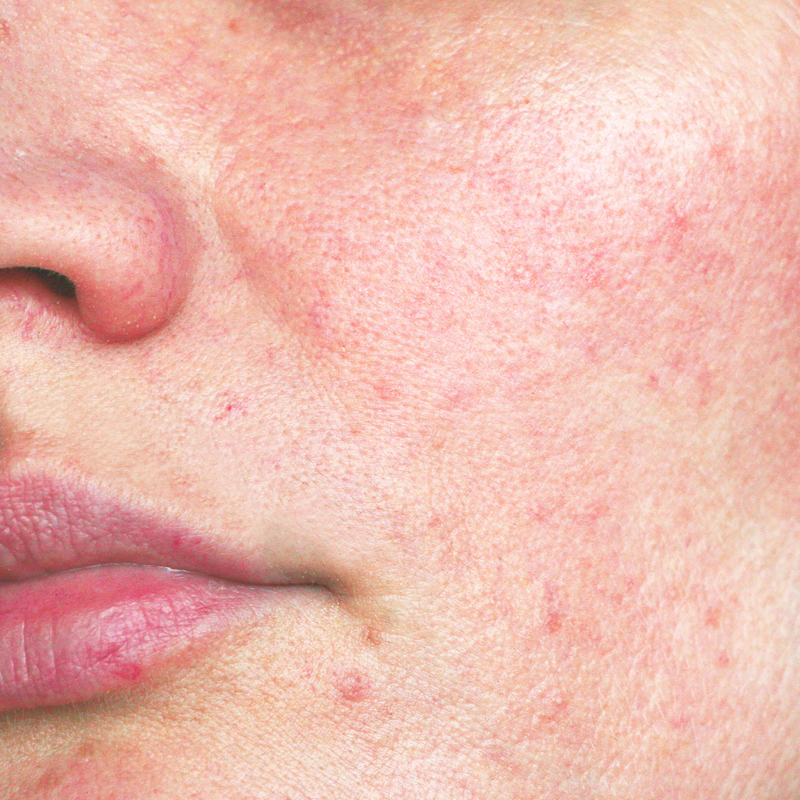
Facial redness
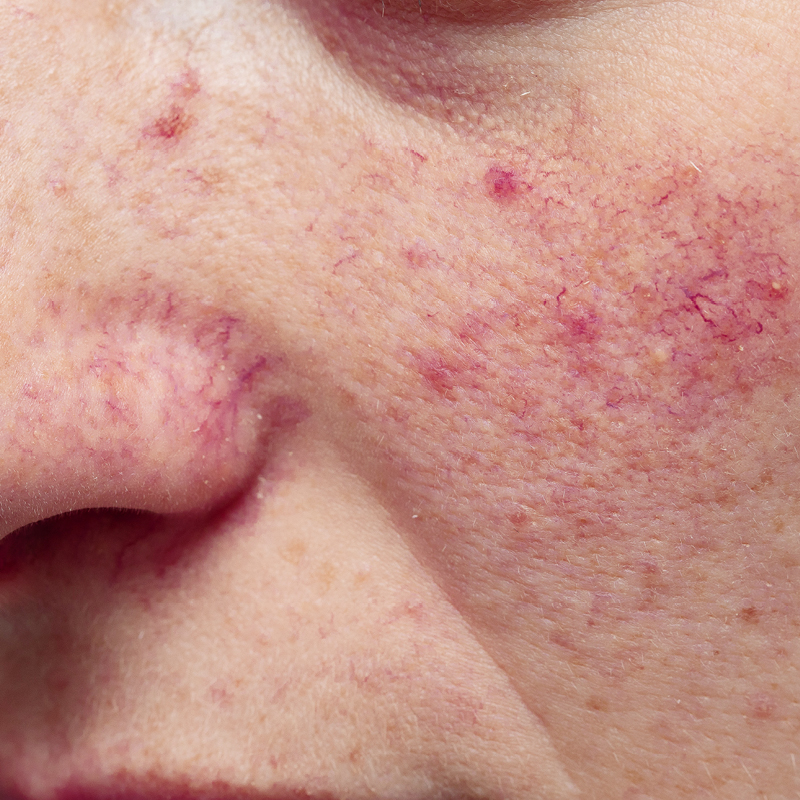
Dilated blood vessels under the skin (telangiectasia)
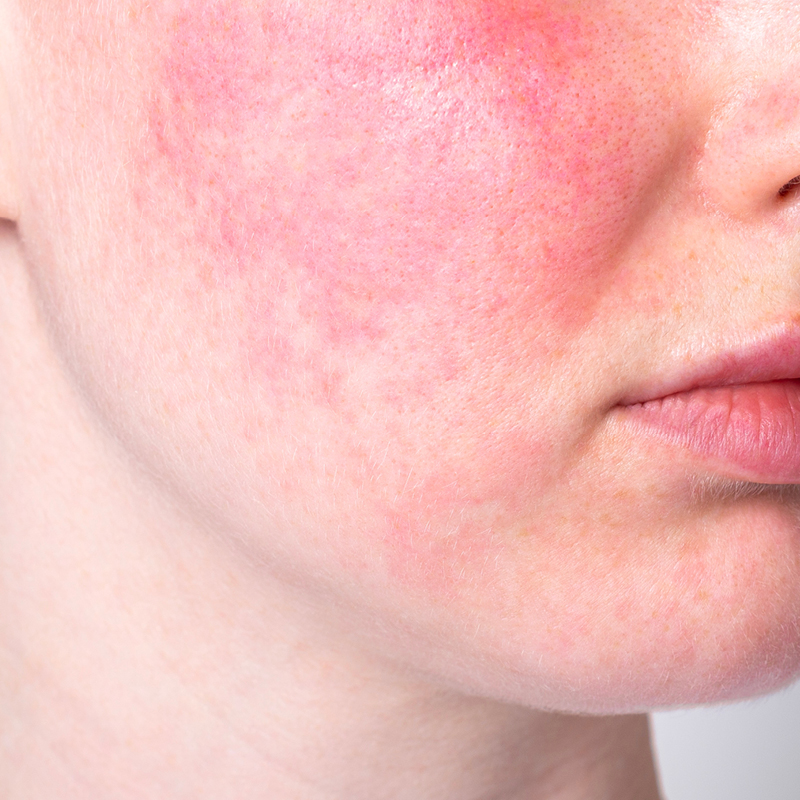
Rosacea on the cheek
Would you like to go directly to our product recommendations?
What makes the skin turn red?
Sensitive skin can overreact to stimuli that others tolerate without difficulty. The cause is often a disrupted skin barrier. If this protective layer is weakened, moisture escapes more easily and irritating substances can penetrate the skin more readily. The skin becomes dry, feels tight, and reacts with irritation. Possible causes of skin redness include:

Stress
and hormonal fluctuations can increase blood flow to the skin and cause redness.

Allergic reactions
Certain ingredients, foods, or environmental factors may trigger redness.

Temperature changes
for example the contrast between cold outdoor air and warm heated air, lead to increased blood flow to the skin.

UV radiation
can irritate the skin, especially in cases of rosacea.
Do you suspect rosacea?
If your skin is frequently or even permanently reddened, we recommend our "Rosacea" page. Learn more now!

When caring for sensitive skin, less is always more! Ideally, skincare products should be well-matched and used consistently. Constantly changing your skincare routine can lead to additional irritation and place unnecessary stress on the skin.

Mild cleansing
Use lukewarm water, fragrance-free emulsions, and avoid mechanical exfoliants.

Soothing & care
Soothing ingredients such as panthenol and liquorice root strengthen the skin barrier and provide moisture.

Protection
To help prevent unwanted blood vessel dilation and the development of new vessels caused by UV exposure, consistent UV protection is essential.


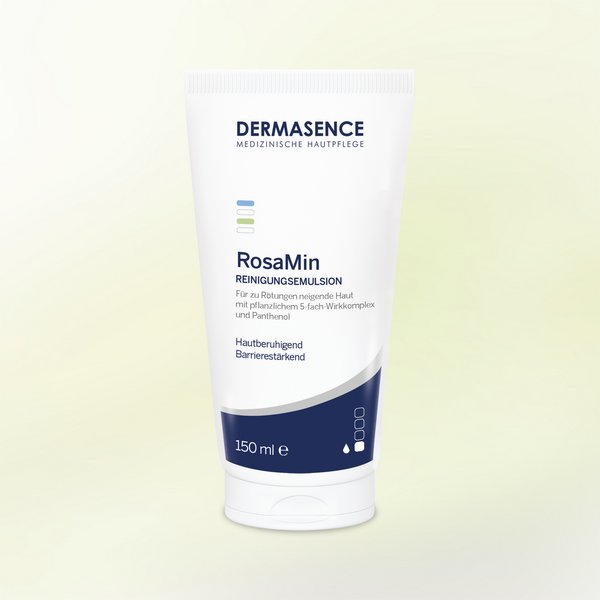
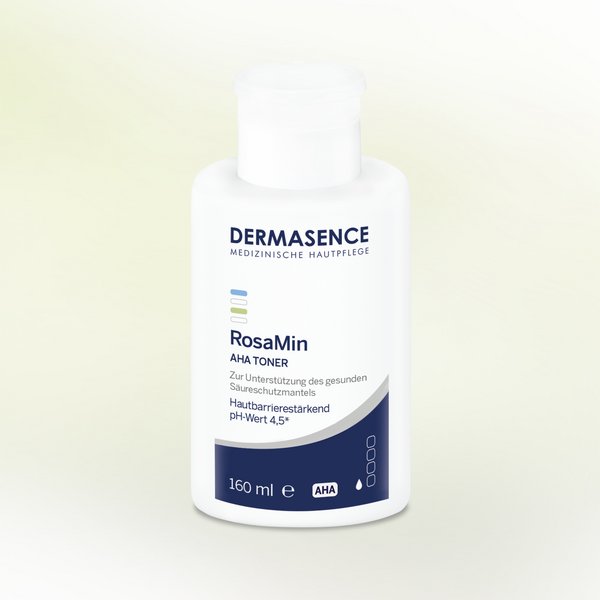
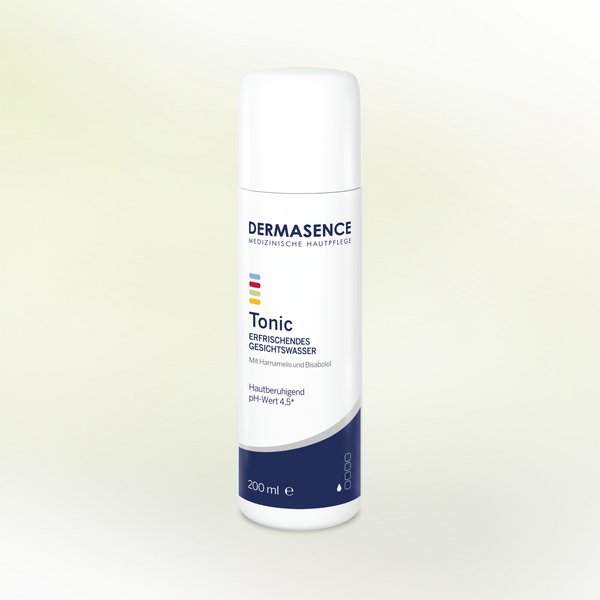
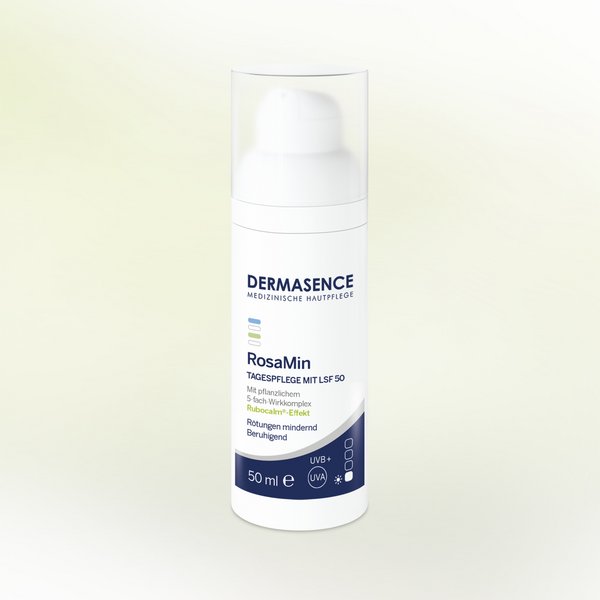
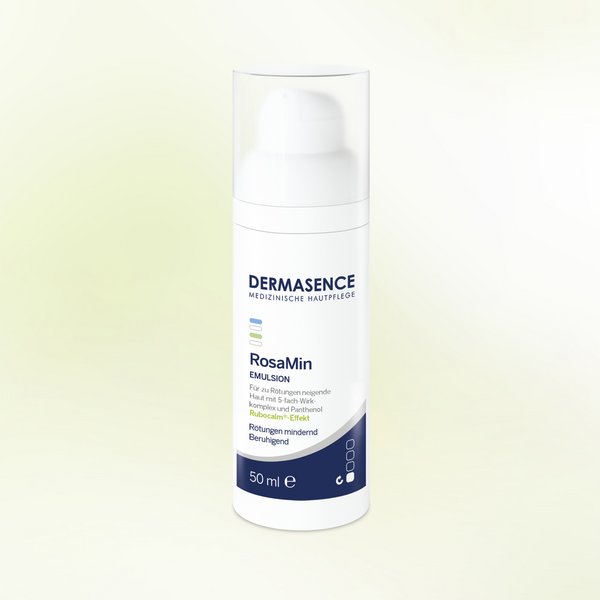
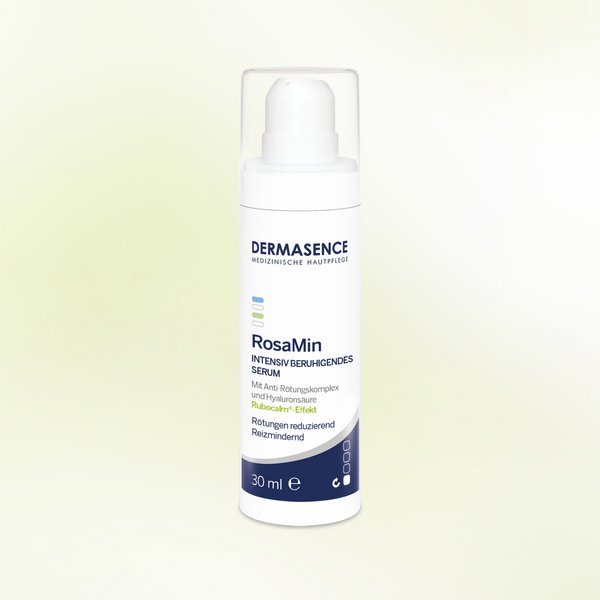
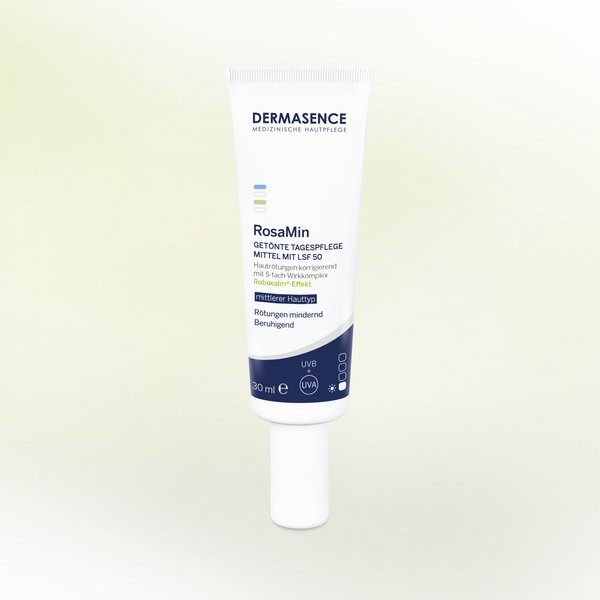
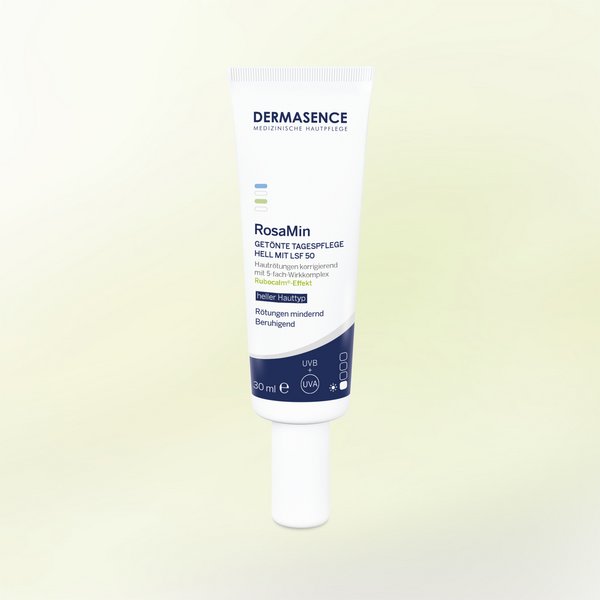
The DERMASENCE RosaMin series for skin redness
Our DERMASENCE RosaMin series was specially developed for sensitive skin prone to redness. The herbal active ingredients strengthen the fine blood vessels that become dilated and weakened during recurring redness – helping to prevent new flare-ups.
The combination of anti-irritant, cooling, and soothing ingredients noticeably calms the skin and leaves it feeling comfortably balanced. For particularly high tolerability, all products are perfume-free and contain only a small amount of lipids.
As UV radiation is a major trigger of skin redness, selected products in the range also provide UV protection. This ensures reliable skin care and protection against external influences.
Sources
- Bährle-Rapp M. Couperose. In: Springer Lexikon Kosmetik Und Körperpflege. Springer Berlin Heidelberg; (2007)130-131. doi:10.1007/978-3-540-71095-0_2466
- Facharztmagazine. Symptome empfindlicher Haut verbessern. In: ästhet dermatol kosmetol 16, 48 (2024). doi: https://doi.org/10.1007/s12634-024-2795-x
- Herrmann K, Trinkkeller U. Blutgefäßerkrankungen. In: Dermatologie Und Medizinische Kosmetik: Leitfaden Für Die Kosmetische Praxis. Springer Berlin Heidelberg; (2015 )67-71. doi:10.1007/978-3-662-45116-8_8
- Kerscher, M. Prinzipien der Behandlung und Schutz für empfindliche Haut. In: Hautarzt 62, (2011) 906–913 . doi: 10.1007/s00105-011-2210-1
- Rümmelein, B. Laser- und Lichtbehandlung bei Couperose und Rosazea. ästhet dermatol kosmetol 13, (2021) 22–24 . https://doi.org/10.1007/s12634-021-1580-3
- S2k-Leitlinie Rosazea. (2022). AWMF-Register-Nr. 013-065. 013-065l_S2k_Rosazea_2022-02.pdf
- van Zuuren EJ, Arents BWM, van der Linden MMD, Vermeulen S, Fedorowicz Z, Tan J. Rosacea: New Concepts in Classification and Treatment. In: American Journal of Clinical Dermatology. (2021);22(4):457-465. doi:10.1007/s40257-021-00595-7