Rosacea
Soothe your reddened skin with our RosaMin series
Red cheeks, red nose – rosacea?
When skin redness becomes a burden
Facial redness is unpleasant for many people. However, many people are unaware that the underlying cause may be the skin condition rosacea (also known as couperose). This condition constitutes a chronic inflammatory disease. This means inflammatory processes occur continuously within the skin. Unfortunately, no treatment currently exists that can cure rosacea. With appropriate care, however, its progression can be influenced, symptoms can be reduced, and further worsening can be prevented.
Typical symptoms:
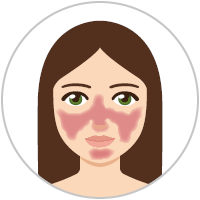
- Sudden, temporary or persistent reddening (erythema) of the cheeks and nose (rhinophyma) in a butterfly shape, less frequently on the chin or forehead
- Flushes (a brief reddening of the skin)
- Visible capillaries (telangiectasia)
- Sensation of heat
- Nodules (papules) and pimples (pustules)
- Growths of connective tissue and sebaceous glands, primarily on the nose
![[Translate to Englisch:] Foto von Rosacea an der Wange](https://www.dermasence.com/fileadmin/Media/Common/Media/02_Meine_Haut/02_Hautproblem/Rosacea/DS_Meine_Haut_Rosacea_Content_1.jpg)
Rosacea flush on the cheeks
![[Translate to Englisch:] Foto von Teleangiektasien an der Wange](https://www.dermasence.com/fileadmin/Media/Common/Media/02_Meine_Haut/02_Hautproblem/Rosacea/DS_Meine_Haut_Rosacea_Content_2.jpg)
Visible capillaries (telangiectasia)
![[Translate to Englisch:] Foto von Papeln und Pusteln bei Rosacea an der Wange](https://www.dermasence.com/fileadmin/Media/Common/Media/02_Meine_Haut/02_Hautproblem/Rosacea/DS_Meine_Haut_Rosacea_Content_3.jpg)
Papules and pustules associated with rosacea
![[Translate to Englisch:] Foto von stark ausgeprägten Wucherungen an der Nase (Rhinophym) bei Rosacea](https://www.dermasence.com/fileadmin/Media/Common/Media/02_Meine_Haut/02_Hautproblem/Rosacea/DS_Meine_Haut_Rosacea_Content_4.jpg)
Rosacea of the nose (rhinophyma)
Would you like to go directly to our product recommendations?
What are the different types of rosacea?
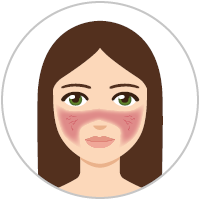
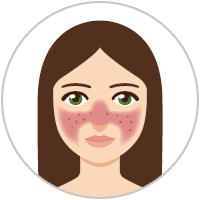
The old classification into subtypes
The traditional classification into a precursor stage and three rosacea subtypes, sometimes also described as stages, is still widely used.

The new classification into phenotypes
Experts now recommend determining the rosacea type based on its symptoms. Because many patients present symptoms from different subtypes, this approach more accurately reflects reality and supports more targeted dermatological therapy.
Dermatologists diagnose rosacea when…
- at least one diagnostic characteristic, OR
- two main characteristics, are present.
The listed secondary characteristics can support the diagnosis of rosacea.
Diagnostic characteristics
- Persistent redness that intensifies in response to triggers
- Growths of connective tissue or sebaceous glands
Main characteristics
- Flushing (temporary redness)
- Pimples (pustules) and nodules (papules)
- Dilated blood vessels (telangiectasia)
Secondary characteristics
- Burning, stinging, dry skin
- Oedema/swelling
Why does rosacea develop?
The exact cause of the skin condition remains unknown. According to medical science, a combination of genetic predisposition and various external factors (triggers) can further impair the skin's appearance.
Although conclusive scientific evidence remains limited, the scientific community considers the heritability of rosacea highly probable. This view is supported by multiple studies evaluating whether relatives have rosacea, which is the case for 30-40% of patients.
Research also focuses on understanding why the inflammatory processes arise in the first place. The focus here centres on immune reactions associated with the excessive production of the signalling molecule cathelicidin. This peptide influences blood vessel growth and the formation of new vascular cells (angiogenesis).
People with rosacea exhibit a higher concentration of the normally harmless hair follicle mite Demodex than is typical. This mite also appears to stimulate cathelicidin production.
Investigations also explore potential disruptions in temperature regulation in the brain of rosacea patients and whether bacterial infections could be a possible cause. Furthermore, rosacea can also occur as a side effect of medication.

UV radiation
Sunlight promotes inflammation and can therefore worsen rosacea symptoms.

Psychological stress
Stressful situations or emotional tension can directly affect the skin's appearance.

Nutrition
Spicy foods, hot drinks, and alcohol are common triggers that can promote redness.

Temperature changes
Strong fluctuations between cold and warmth – for example, when moving from outdoors to indoors – can stimulate skin circulation and increase redness.
Although rosacea is not curable, it is highly treatable. Symptoms can be significantly reduced and the skin calmed over the long term.
The most important treatment options for rosacea include:
Creams or oral medications prescribed by dermatologists can help reduce inflammation and redness.
Laser treatments can visibly reduce dilated blood vessels and redness, resulting in a calmer and more even complexion overall.
Avoiding one's specific triggers, such as sun, heat, alcohol or spicy foods, can significantly reduce skin irritation and improve the skin's appearance in the long term.
Proper medical skincare can help reduce redness and other symptoms.
Acid hardening for rosacea
At first glance, using fruit acids on sensitive, rosacea-prone skin may seem contradictory, as acids are often associated with irritation. However, in mild doses, so-called acid hardening can help to make the skin more resistant step by step. The skin is gradually accustomed to the application of fruit acids (AHAs) in order to increase its tolerance. The gentle treatment supports the skin's natural pH and strengthens its barrier to provide sustained protection from external influences.
Unfortunately, this statement is not a myth but the truth. According to current research, rosacea is incurable. However, we can offer some reassurance: with the right treatment, it can be well controlled and stabilised, especially in the early stages.
Although rosacea is usually diagnosed after the age of 30, it can also occur earlier. A study conducted in Germany revealed that approximately 12% of the population suffers from rosacea. The highest prevalence, meaning the highest proportion of affected individuals, appeared in the 30-39-year-olds and the 50-59-year-olds. Children, on the other hand, are rarely affected.
Furthermore, gender-related differences are evident: Men typically develop the condition much later than women and are more frequently affected by rhinophyma, the severe form of rosacea.
The answer is: No!
Rosacea differs from acne in many significant ways.
Rosacea:
- Inflammation of the connective tissue
- Dilated blood vessels, papules and pustules, but no blackheads
- Sensitive skin
Acne:
- Inflammation of the sebaceous glands
- Blackheads, papules and pustules
- Acne marks and/or scars
That is partly true: Ideally, heavy and firm textures should be avoided. The facial skin should also be subjected to as little mechanical stress as possible. However, the psychological effect on self-confidence should not be overlooked: Make-up can help to conceal redness and improve well-being.
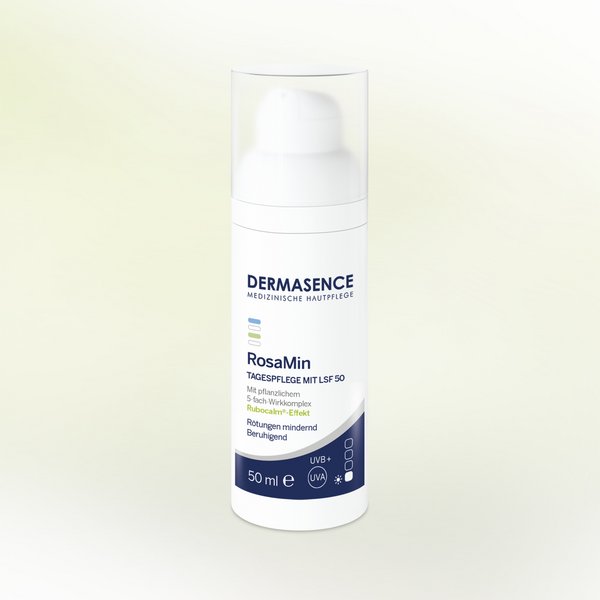
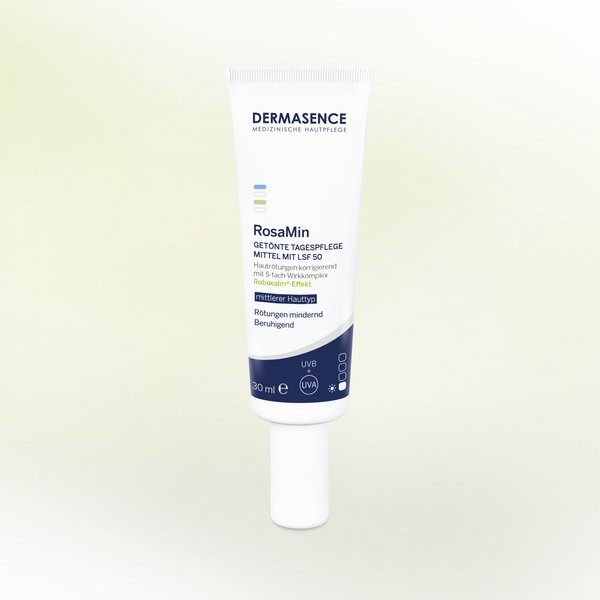
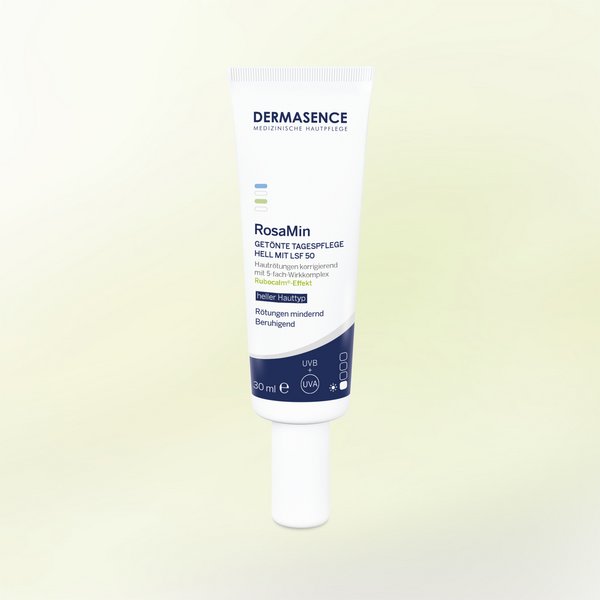
For this purpose, we recommend the DERMASENCE RosaMin Tinted day cream with SPF 50. The herbal 5-fold complex strengthens the blood vessels and prevents redness. The skin tone-adapting formula simultaneously corrects existing redness and evens out the skin's appearance. Additionally, it includes a high sun protection factor, which protects the skin from UV-induced vasodilation.

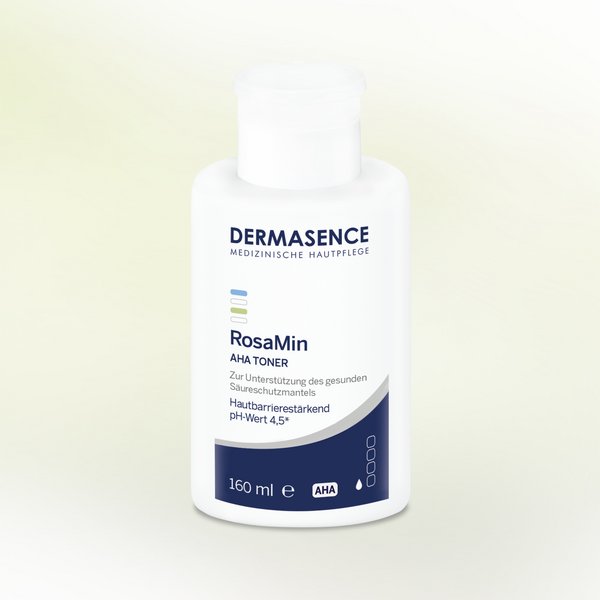
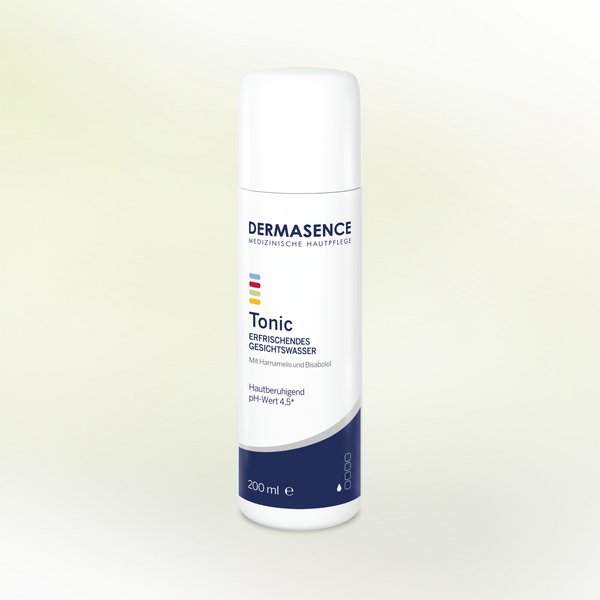
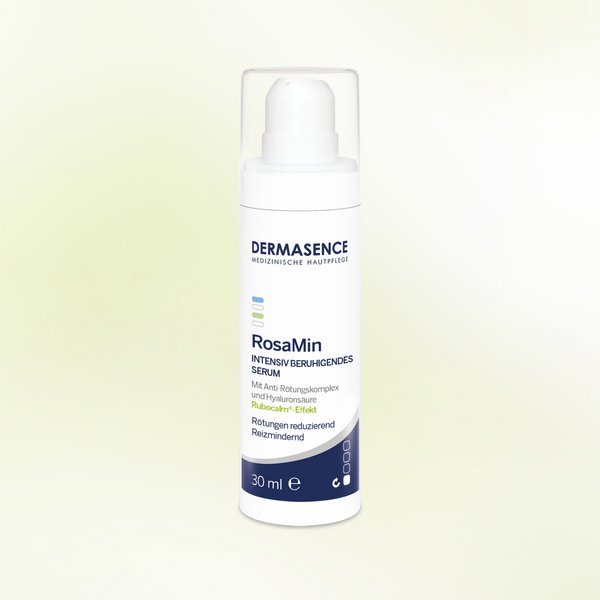
Rosacea? The DERMASENCE RosaMin series!
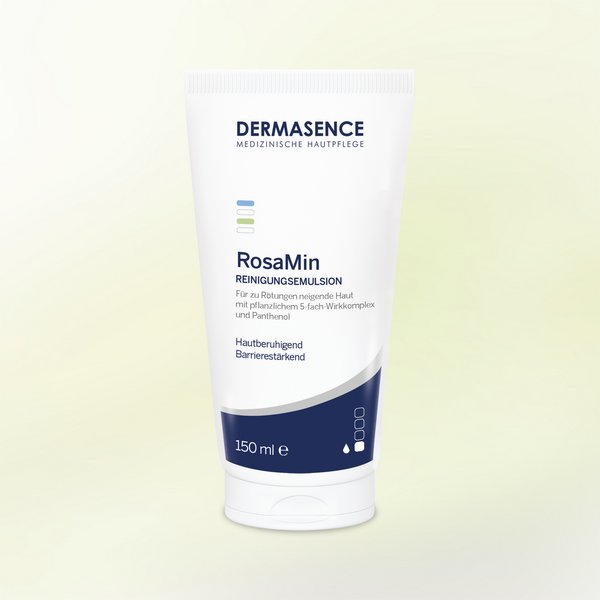
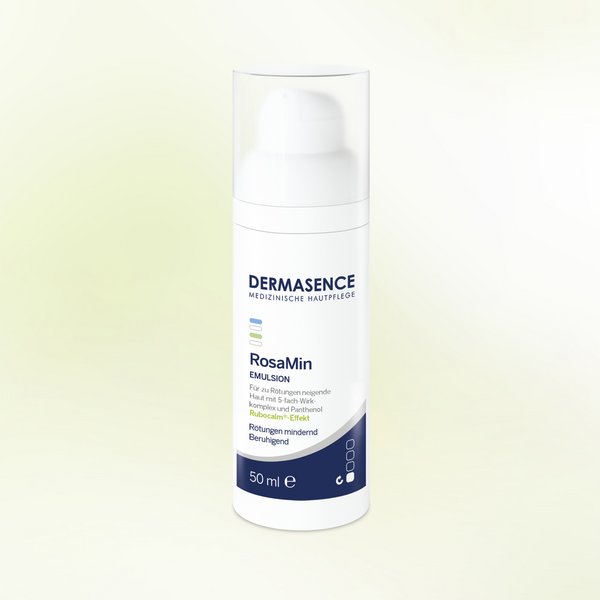
Rosacea presents the skin with particular challenges: It becomes sensitive, prone to persistent redness, and requires care that soothes, protects and strengthens. The DERMASENCE RosaMin series was formulated specifically to address these needs. Precisely tailored to the requirements of sensitive and reddened skin, it is ideally suited for skin prone to rosacea.
Herbal active ingredients reinforce the fine blood vessels, reducing the formation of new redness. Cooling and soothing ingredients calm the skin and help reduce sensations of heat and tension. Since UV radiation represents one of the most significant rosacea triggers, the RosaMin series day creams also contain integrated UV protection to shield the skin from sun-induced irritation. All products in the series are fragrance-free and contain a low lipid content – for maximum tolerability and a pleasant skin feel. This ensures reliable care for sensitive skin, fortifies it and safeguards it against external irritants.
Sources
- Ahn CS, Huang WW. Rosacea Pathogenesis. Dermatol Clin. 2018;36(2):81-86. doi:10.1016/j.det.2017.11.001
- Clanner-Engelshofen, B. M., Bernhard, D., Dargatz, S., Flaig, M. J., Gieler, U., Kinberger, M., Klövekorn, W., Kuna, A. C., Läuchli, S., Lehmann, P., Nast, A., Pleyer, U., Schaller, M., Schöfer, H., Steinhoff, M., Schwennesen, T., Werner, R. N., Zierhut, M., & Reinholz, M.. S2k-guideline: Rosacea. Journal der Deutschen Dermatologischen Gesellschaft (Journal of the German Society of Dermatology): JDDG. 2022; 20(8), 1147–1167. doi.org/10.1111/ddg.14849_g
- Daou H, Paradiso M, Hennessy K, Seminario-Vidal L. Rosacea and the Microbiome: A Systematic Review. Dermatol Ther. 2021;11(1):1-12. doi:10.1007/s13555-020-00460-1
- Forton FMN. The Pathogenic Role of Demodex Mites in Rosacea: A Potential Therapeutic Target Already in Erythematotelangiectatic Rosacea? Dermatol Ther. 2020;10(6):1229-1253. doi:10.1007/s13555-020-00458-93.
- Kim JY, Kim YJ, Lim BJ, Sohn HJ, Shin D, Oh SH. Increased expression of cathelicidin by direct activation of protease-activated receptor 2: possible implications on the pathogenesis of rosacea. Yonsei Med J. 2014;55(6):1648-1655. doi:10.3349/ymj.2014.55.6.1648
- Rainer BM, Kang S, Chien AL. Rosacea: Epidemiology, pathogenesis, and treatment. Dermatoendocrinol. 2017;9(1):e1361574. doi:10.1080/19381980.2017.1361574