Living with Psoriasis
More than scales, plaques and flare-ups
The DERMASENCE Psoriasis Study
Psoriasis is far more than a visible skin condition. But what does living with psoriasis actually mean for those affected?
For the DERMASENCE Psoriasis survey, 408 people with psoriasis in Germany were interviewed. The findings highlight the wide-ranging impact of the condition. In addition to physical symptoms such as itching, dryness and plaques, many respondents report psychological burden, social challenges and prejudice in everyday life.
One thing is clear: psoriasis cannot be reduced to flare-ups and skin symptoms alone. Behind every diagnosis are individual experiences, challenges and personal ways of coping with the condition.
We have grouped the key findings of the study into four thematic areas:
➔ Symptoms
About the study
Appinio on behalf of Medicos Kosmetik GmbH & Co. KG
- Fieldwork period: 20 May 2026 – 11 June 2026
- n=408 participants
- Age: 18 years and older
- Residence: Germany
- Target group: People with psoriasis
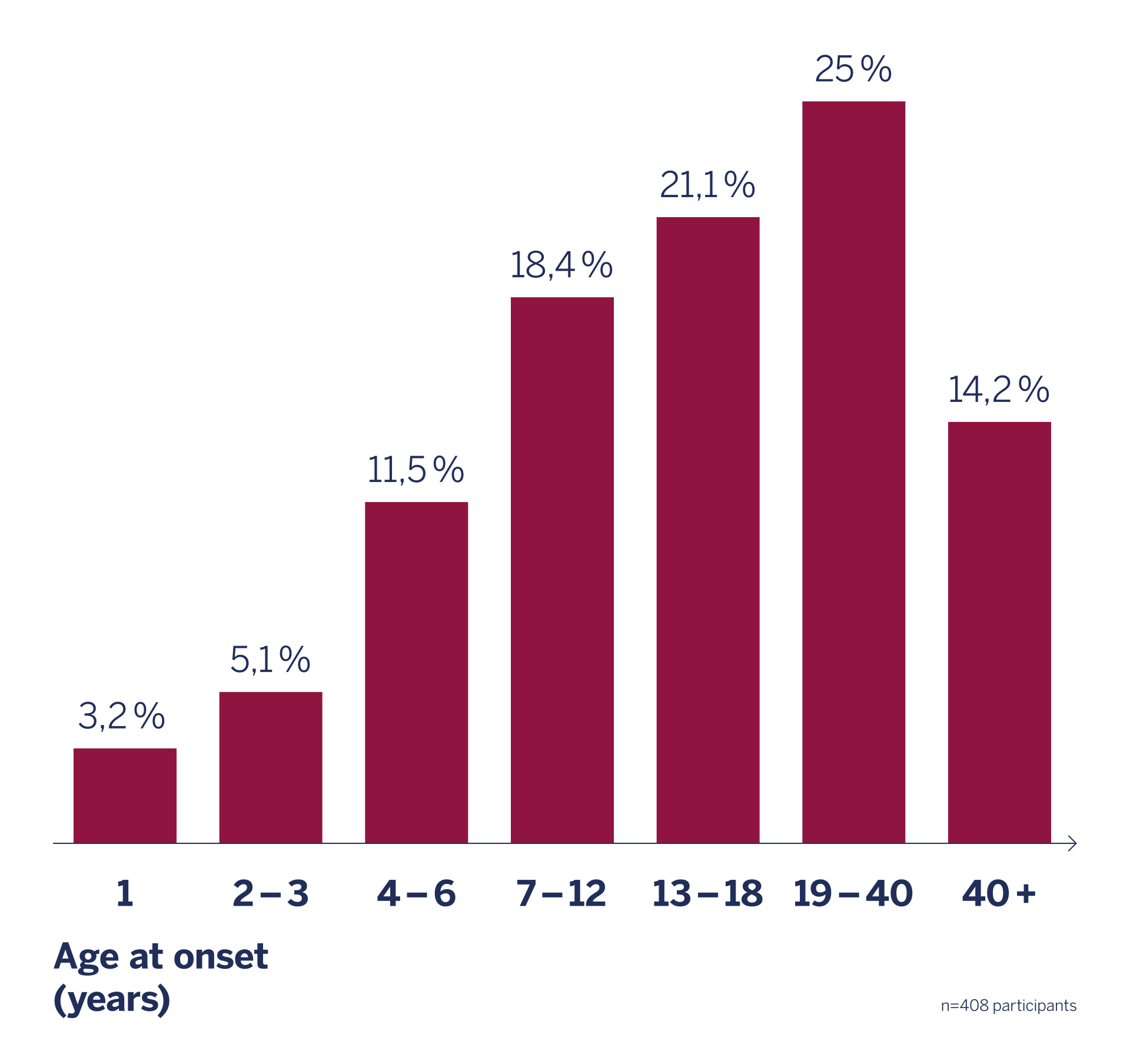
The skin rarely gets a break
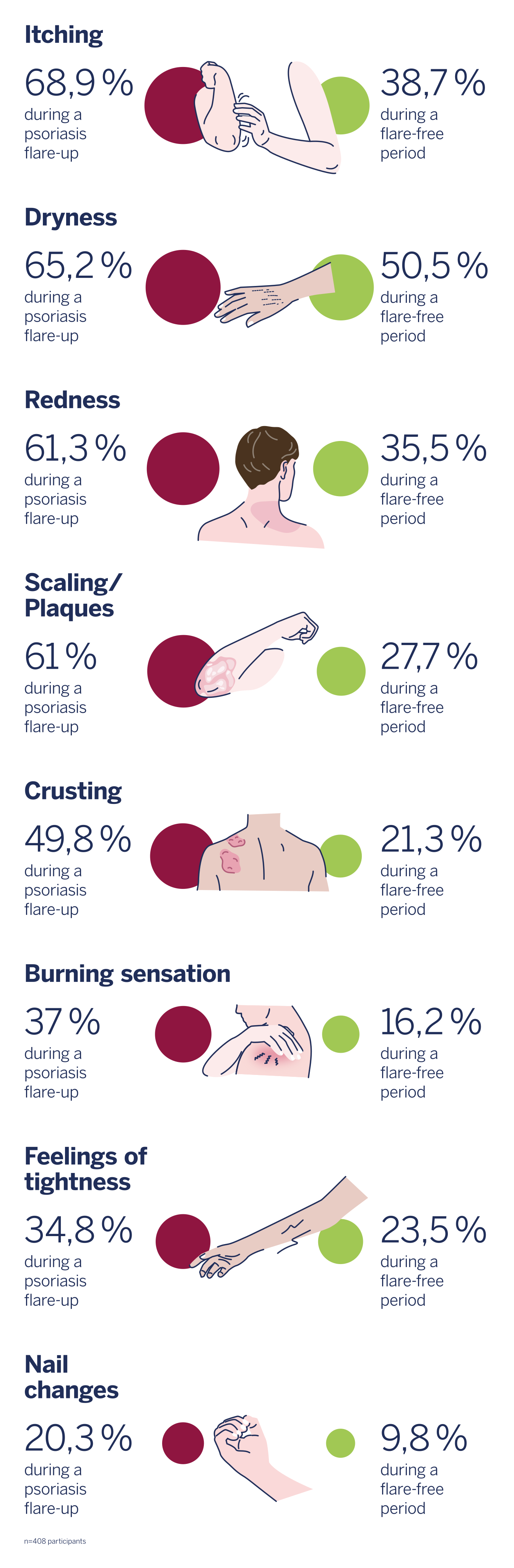
Itching, dryness, redness or plaques: the symptoms experienced by people with psoriasis are diverse and often extend beyond acute flare-ups. Our survey shows that many respondents continue to live with skin symptoms even during periods without flare-ups. Itching and dryness in particular remain constant companions for many individuals.
The following chart illustrates which symptoms occur most frequently during flare-ups and during flare-free periods.
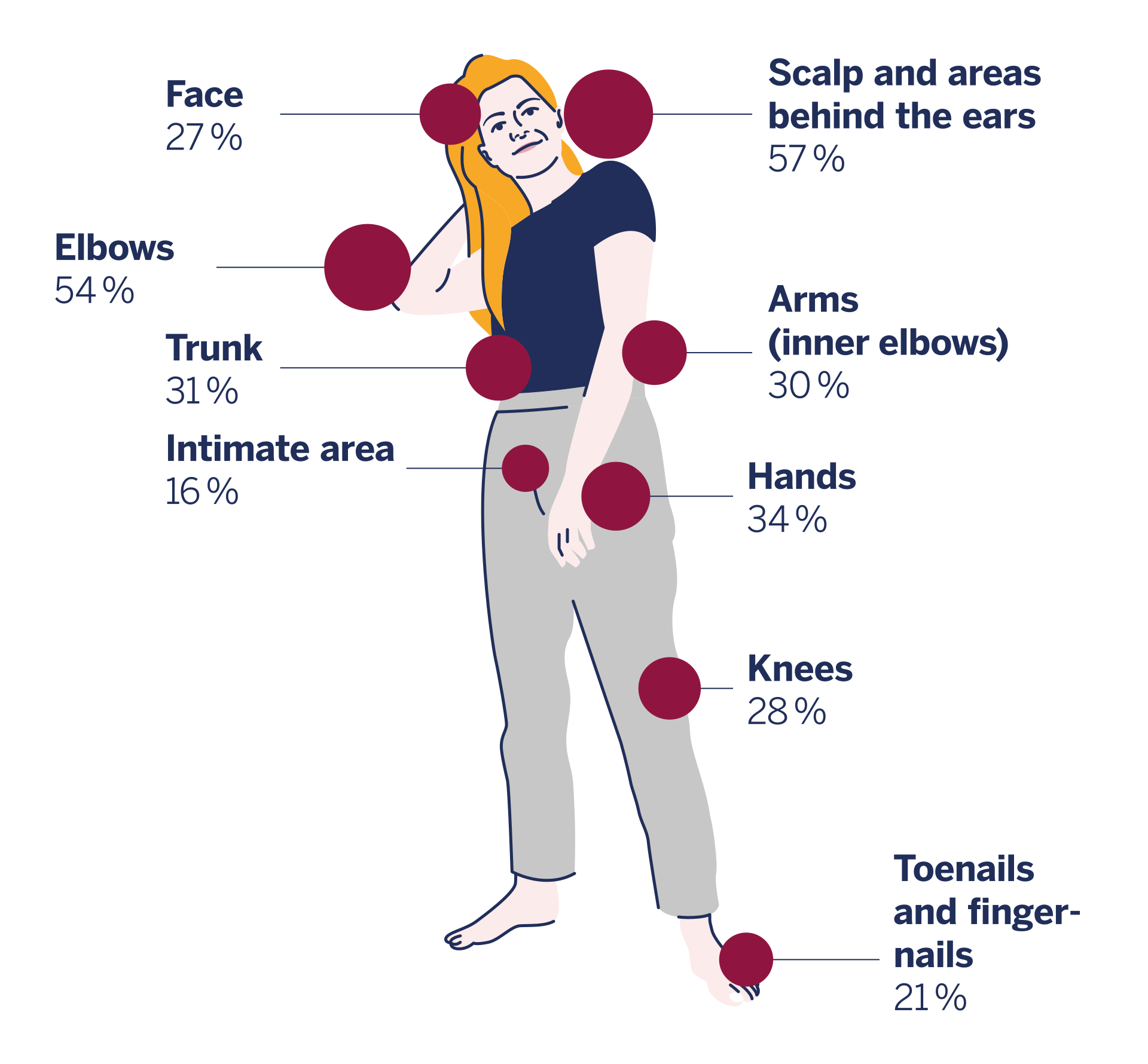
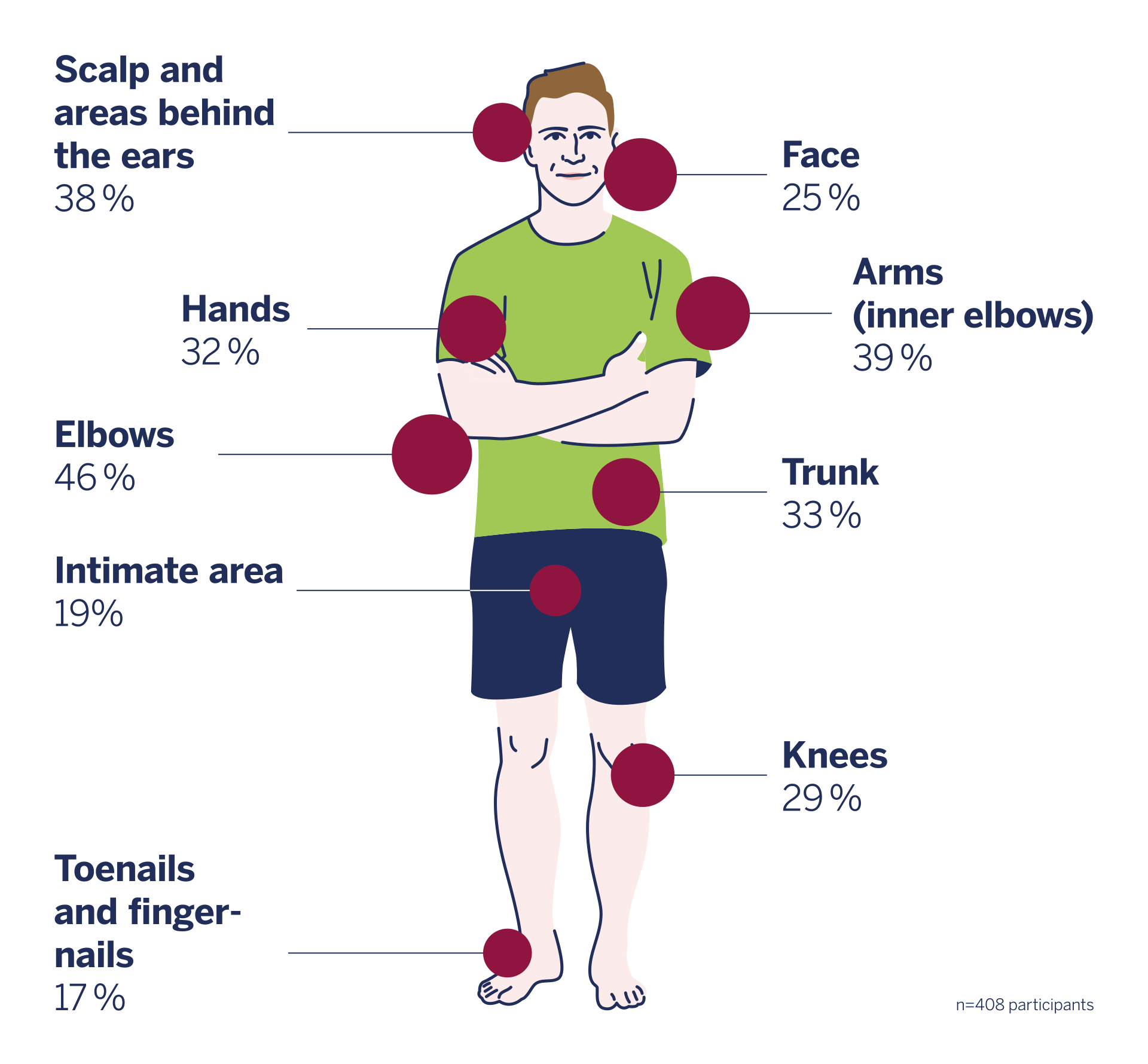
From the scalp to the nails
Women most commonly report psoriasis affecting the scalp, elbows and hands. The face and nails are also affected slightly more often than in men.
Men, on the other hand, more frequently report symptoms in the crooks of the arms, behind the knees, under the arms and in the genital area.
Overall, the results show that psoriasis extends far beyond the classic sites on the elbows and knees and can affect almost any part of the body.
Psoriasis rarely comes alone
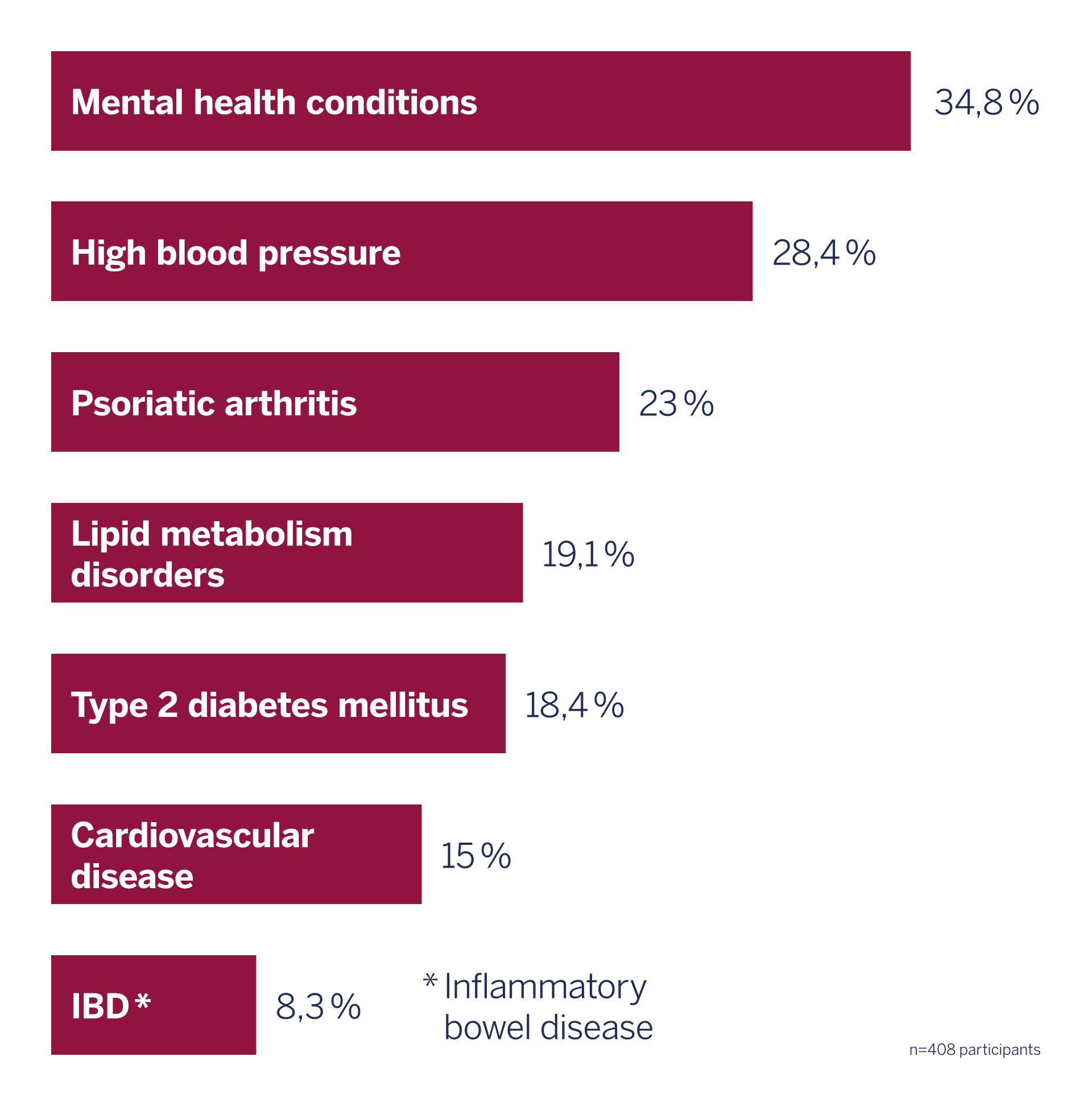
For many people, the burden does not end with itching, plaques or flare-ups. Our survey shows that many respondents also live with additional health challenges. In our study, more than one third of respondents reported living with mental health conditions in addition to psoriasis. High blood pressure and psoriatic arthritis were also frequently mentioned.
Personal triggers are often known
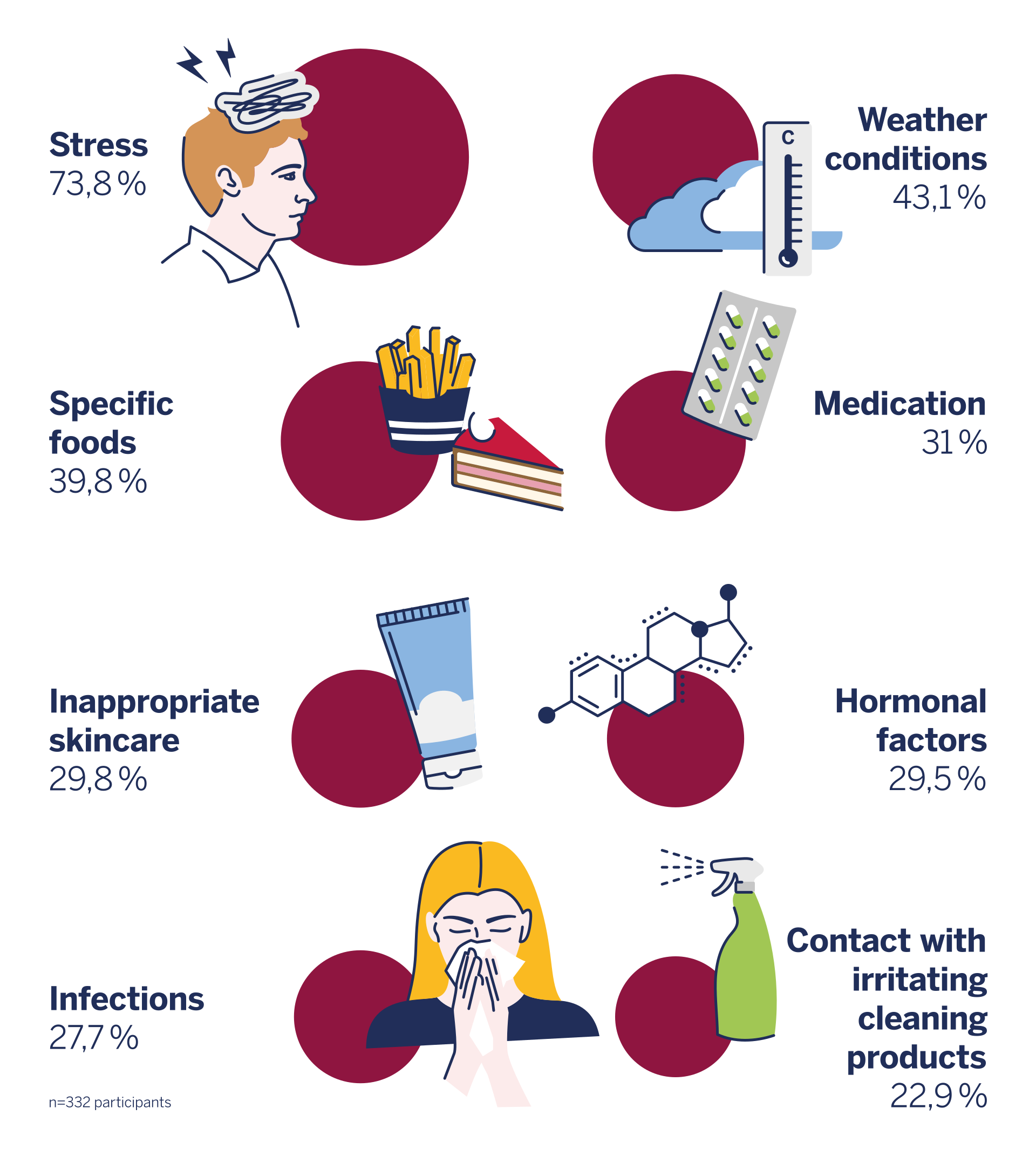
Psoriasis flare-ups rarely occur without an identifiable cause. In fact, the majority of respondents reported that they had identified all or at least some of their personal trigger factors. Nevertheless, around one in five individuals is unaware of their own triggers, which can make managing the condition even more challenging.
The findings also show that certain factors are particularly frequently associated with the occurrence of flare-ups. While trigger factors can vary greatly from person to person, some are reported far more often than others.
Psoriasis often runs in families
Psoriasis frequently occurs within families. In our study, almost 38 % of respondents reported having first-degree relatives (parents) who are also affected by psoriasis. A further 34 % reported psoriasis among second-degree relatives (siblings, grandparents or grandchildren). Around one in four respondents stated that they were the only person with psoriasis in their family. These findings suggest that genetic factors play an important role in the development of the condition. At the same time, they demonstrate that psoriasis can also occur in the absence of a known family history.
The invisible burden behind visible symptoms
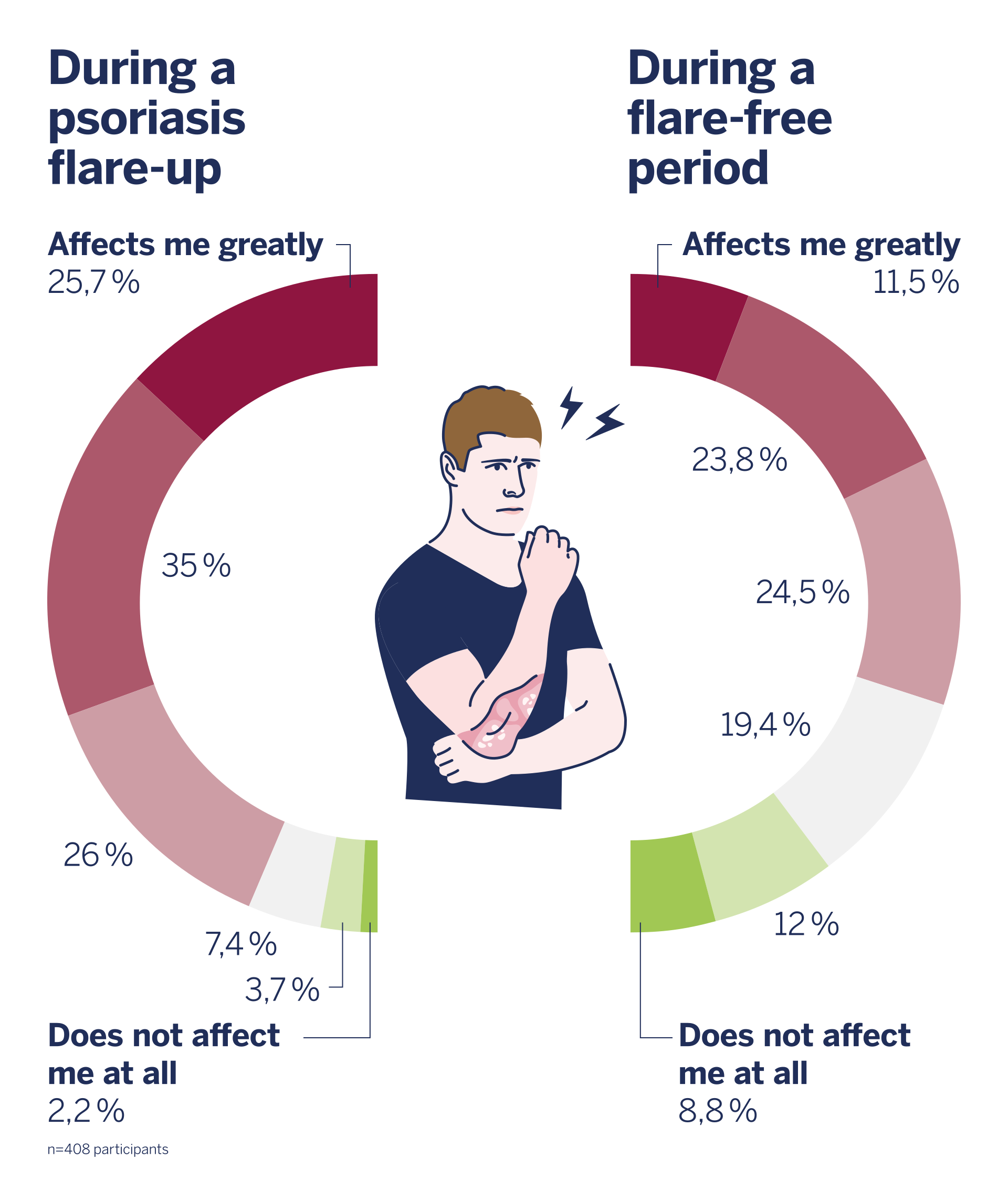
What others see is often only part of the condition. Behind the visible skin changes are feelings of burden, insecurity and the constant concern about the next flare-up. For many people, psoriasis affects far more than the skin. It has a significant impact on everyday life. This becomes particularly apparent when looking at different phases of the condition. During a flare-up, almost 87 % of respondents reported feeling burdened, shown here in red. Yet even during flare-free periods, more than half continue to experience a noticeable impact on their daily lives.
People who know nothing about psoriasis often look at you strangely, as if you had a contagious disease. On top of that, you sometimes have to deal with insensitive comments.
I experienced a severe flare-up due to stress at work and it affected my entire body. I believe people felt disgusted and were afraid of catching it.
Having psoriasis means a severe impairment to quality of life.
Between understanding and uncertainty: How do people with psoriasis experience those around them?
Not only the condition itself but also the reactions of others can influence life with psoriasis. The majority of respondents described their family and friends as understanding and considerate in dealing with their psoriasis. Within their close personal environment, many feel well supported. In the wider social environment, such as among colleagues or acquaintances, perceptions were somewhat less positive. People with psoriasis encounter gaps in knowledge about the condition and uncertainty when others are faced with visible skin changes. This underlines the importance of education and open conversations about psoriasis and its impact on daily life.
This condition can be psychologically very distressing and highly limiting in everyday life for those affected, largely due to feelings of shame. More people should also be aware that psoriasis is not caused by poor personal hygiene, nor is it related to a lack of cleanliness.
People with psoriasis should know that it is not their fault, and that it certainly has nothing to do with poor personal hygiene.
Above all, people should know that psoriasis is not contagious. Better awareness and understanding can also be very beneficial for those affected.
What kind of support really helps?
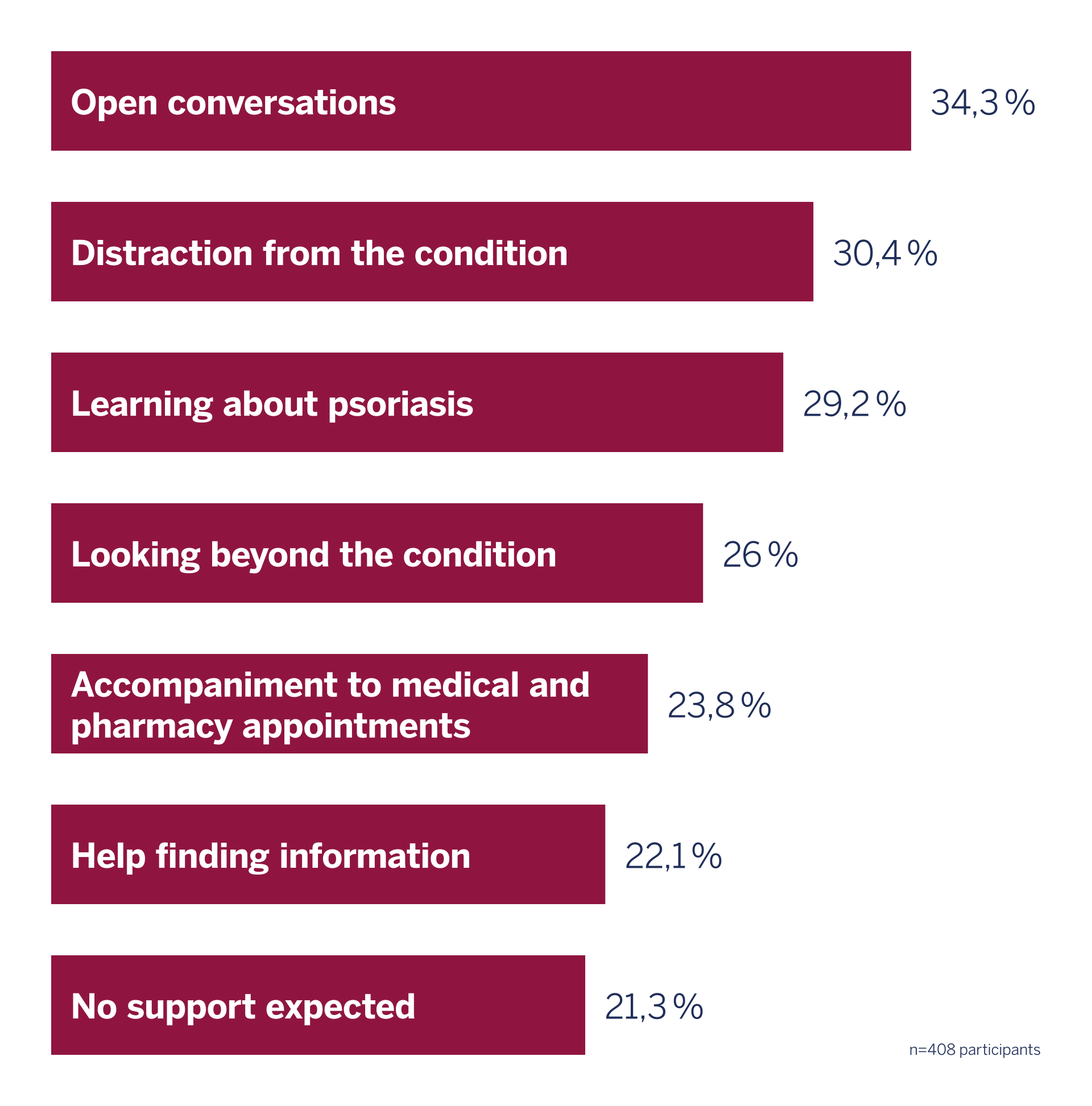
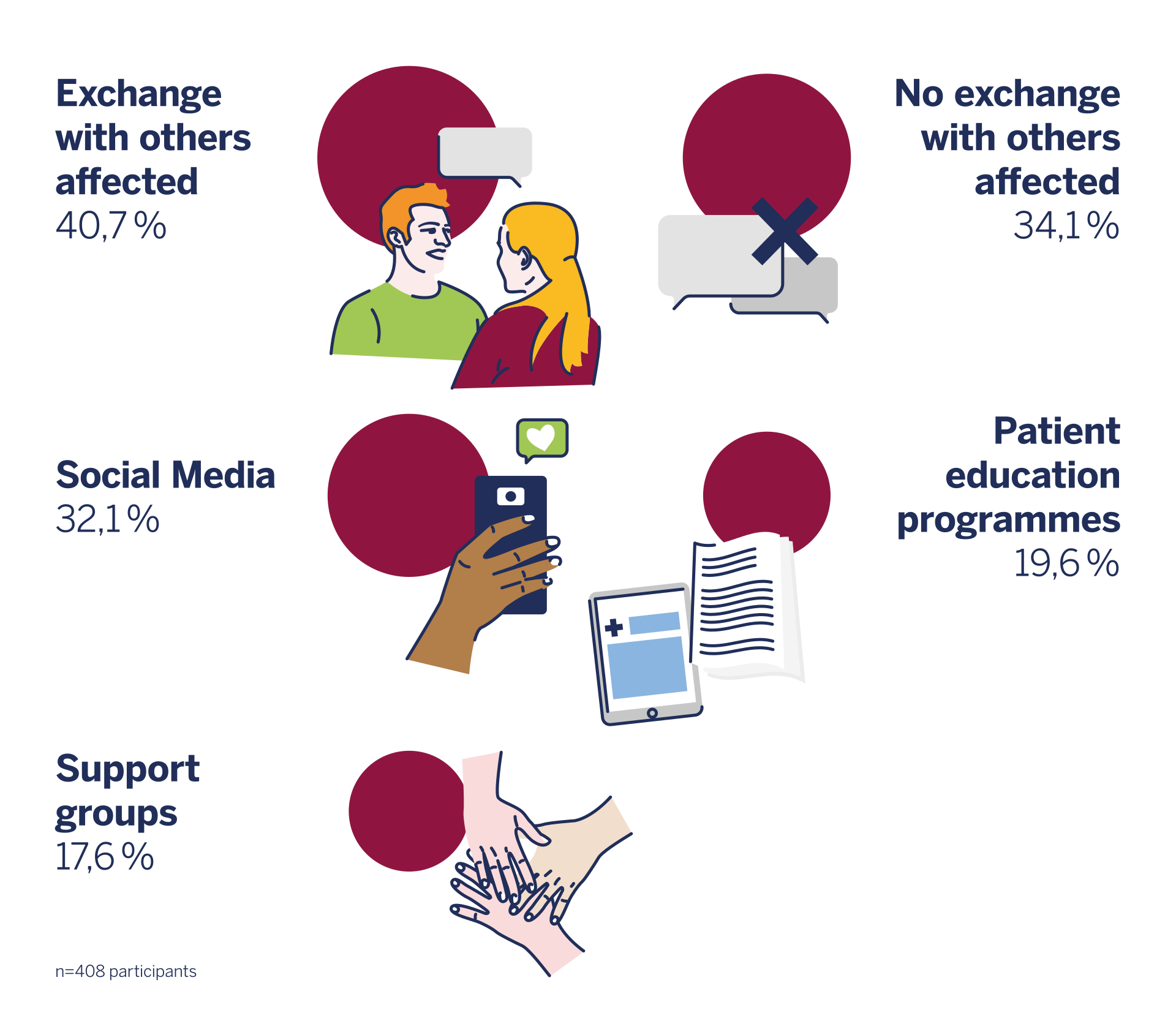
In addition to effective treatment, understanding, consideration and genuine interest can make living with psoriasis much easier. However, the type of support that people with psoriasis value most varies from person to person. We therefore asked participants what forms of support they would like to receive from those around them.
Where do people with psoriasis get information?
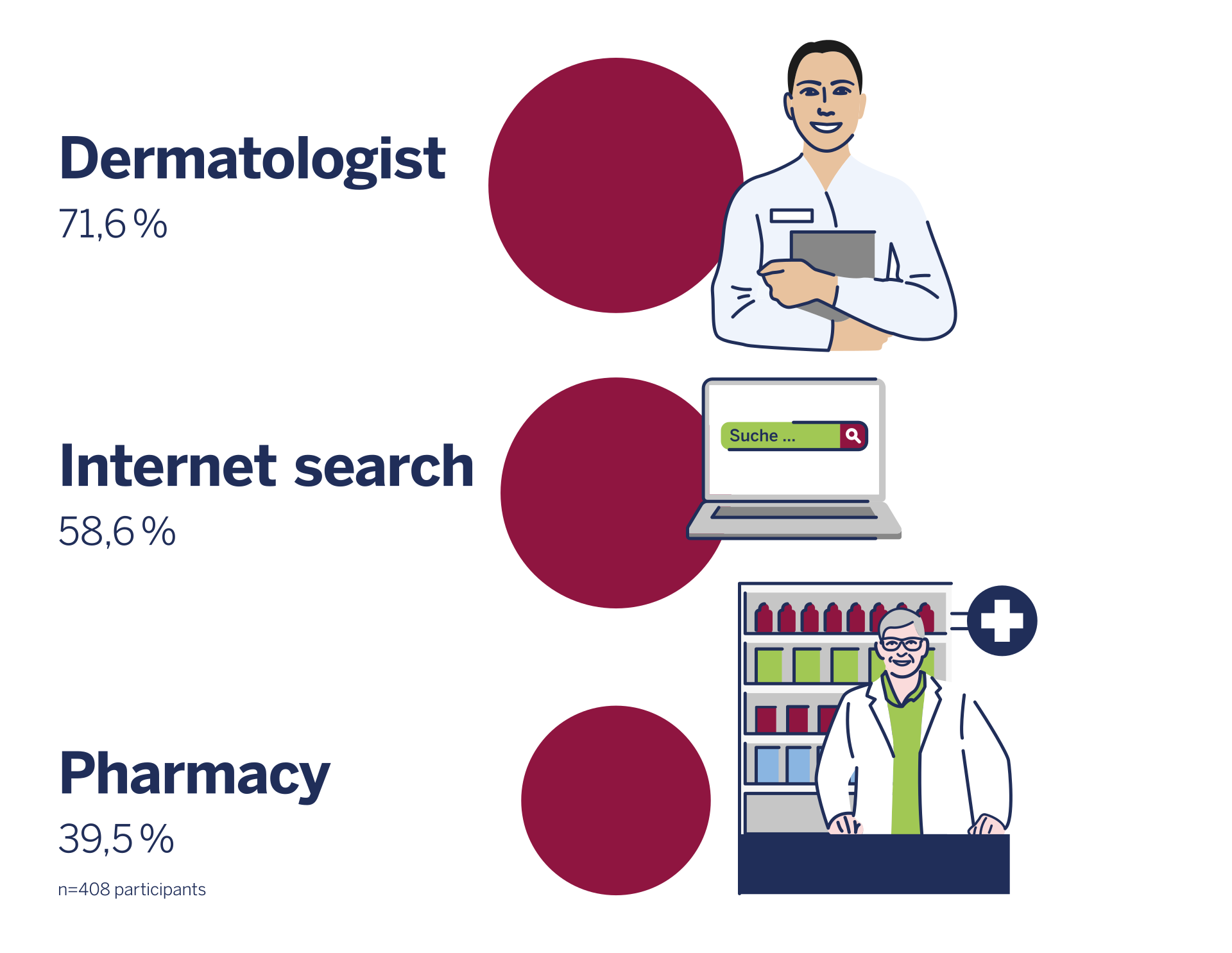
Today, people with psoriasis rely on a wide range of information sources. In addition to dermatologists, digital information resources play an increasingly important role. Particularly noteworthy is that, alongside traditional internet searches, around one in three respondents now also uses AI applications to learn more about the condition. The following chart shows the three information sources most frequently mentioned.
What do people wish they had known earlier?
Living with psoriasis is often shaped by experience, trial and error, and new insights gained over time. When asked what they wished they had known earlier about their condition, many respondents highlighted the importance of personal trigger factors, the influence of stress and nutrition, and the value of appropriate treatment and skin care.
I wish I had known earlier that stress can be a trigger and that taking appropriate measures may help prevent flare-ups.
I would have liked to learn sooner which foods may worsen symptoms and which do not, as well as more about the overall impact of nutrition.
How important the right skin care and consistent treatment really are.
Which treatments help the most?
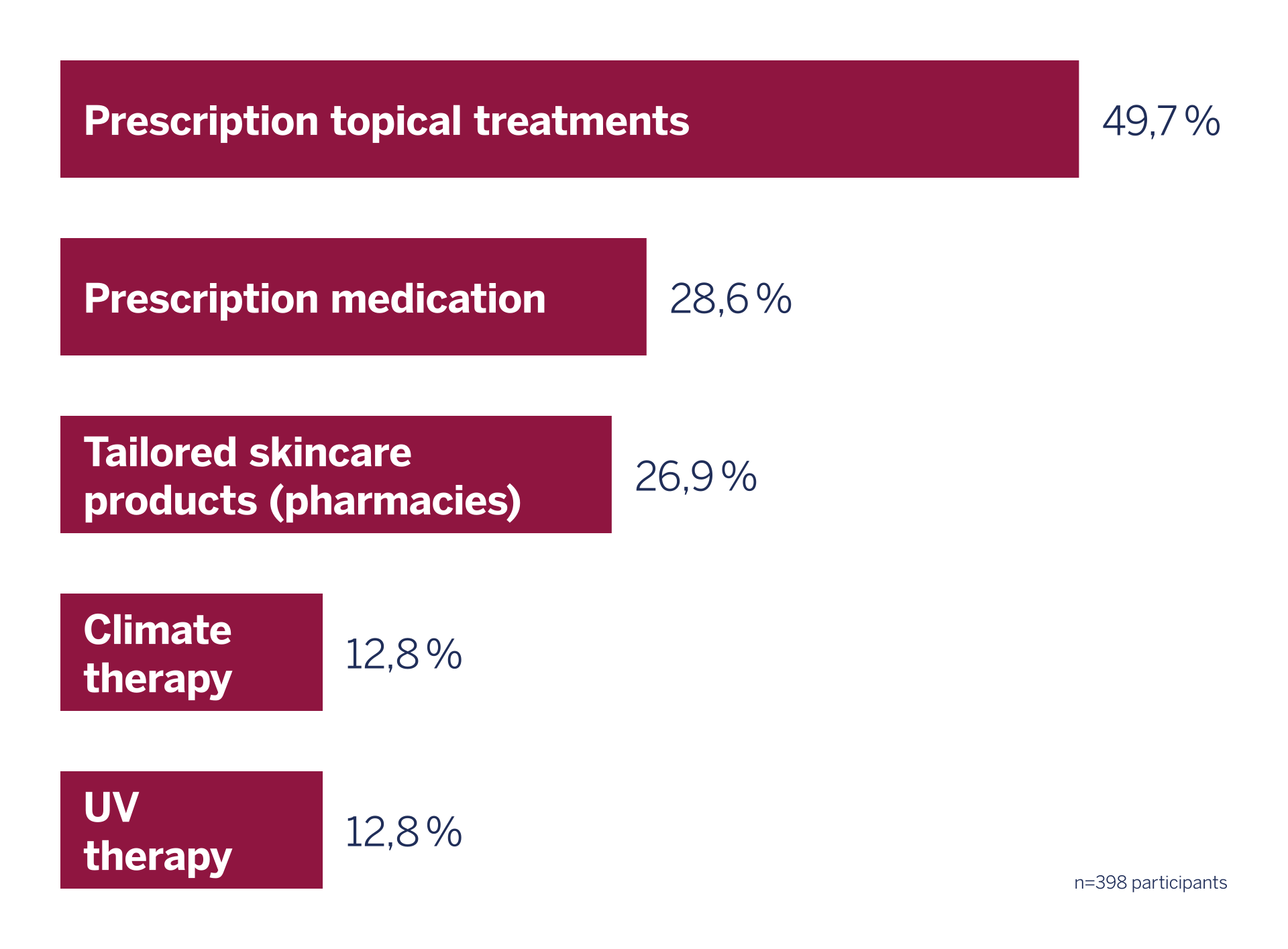
Many people with psoriasis try different treatment approaches throughout the course of their condition. Prescription topical treatments are most frequently cited as being particularly helpful. At the same time, the findings show that suitable pharmacy-recommended skin care is also an important part of managing the condition for many people. The following analysis shows which treatment options respondents found most beneficial.
The pharmacy as an important source of advice
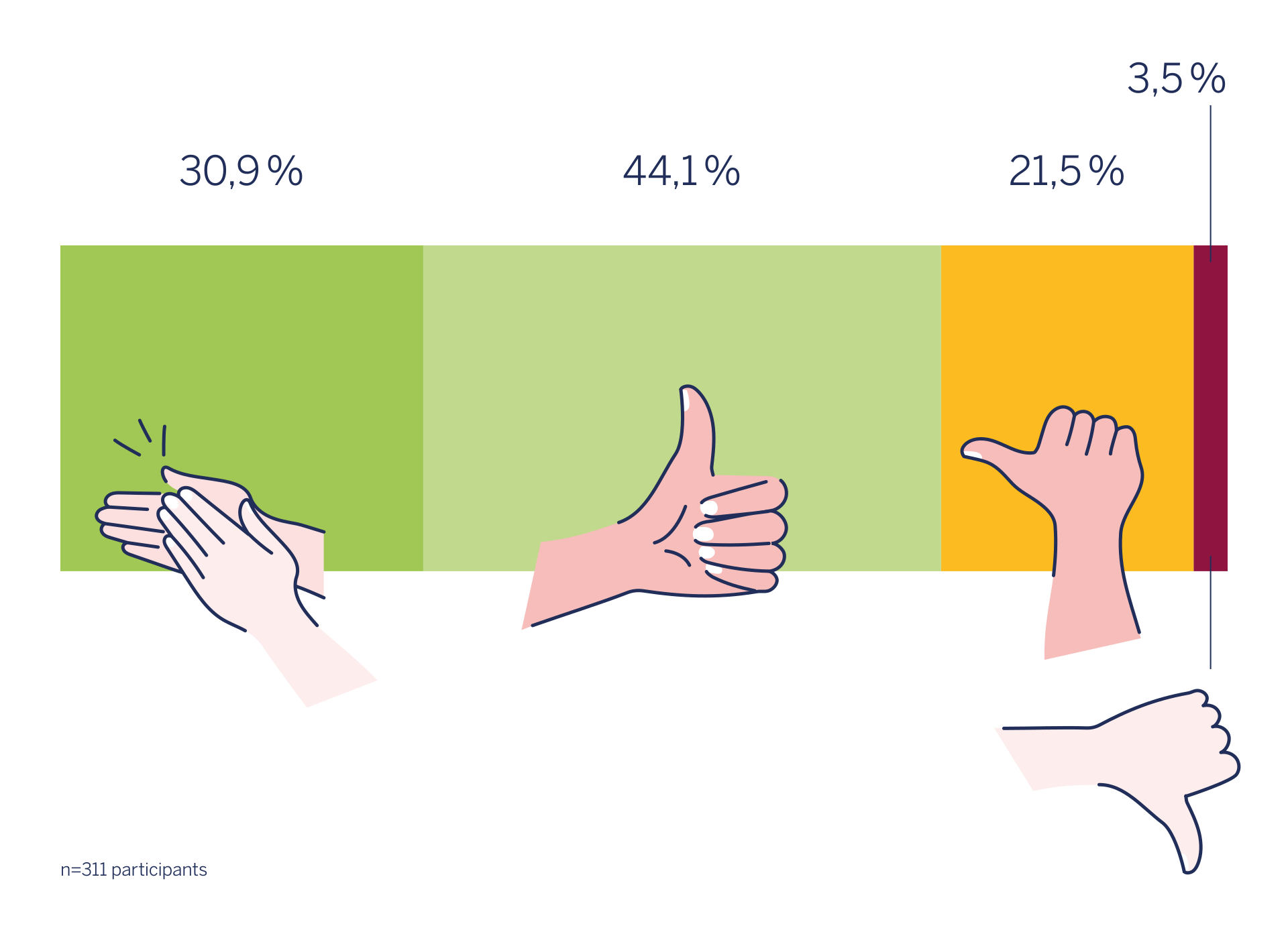
For many people with psoriasis, the pharmacy is an important point of contact when it comes to skin care and the day-to-day management of their skin. The results of our study show that the majority of respondents have already received advice on psoriasis-related skin care from a pharmacy professional. Particularly noteworthy is that around three quarters of respondents describe their overall experience with pharmacy support for psoriasis as (very) satisfactory.
Skin care makes a difference
Anyone living with psoriasis knows that the right skin care routine can make a noticeable difference. Respondents were equally clear in their assessment: the vast majority attribute a moderate or even substantial impact on their skin condition to their skin care routine.
However, not every product meets the same expectations. We therefore asked respondents which factors are particularly important to them when selecting skin care products.
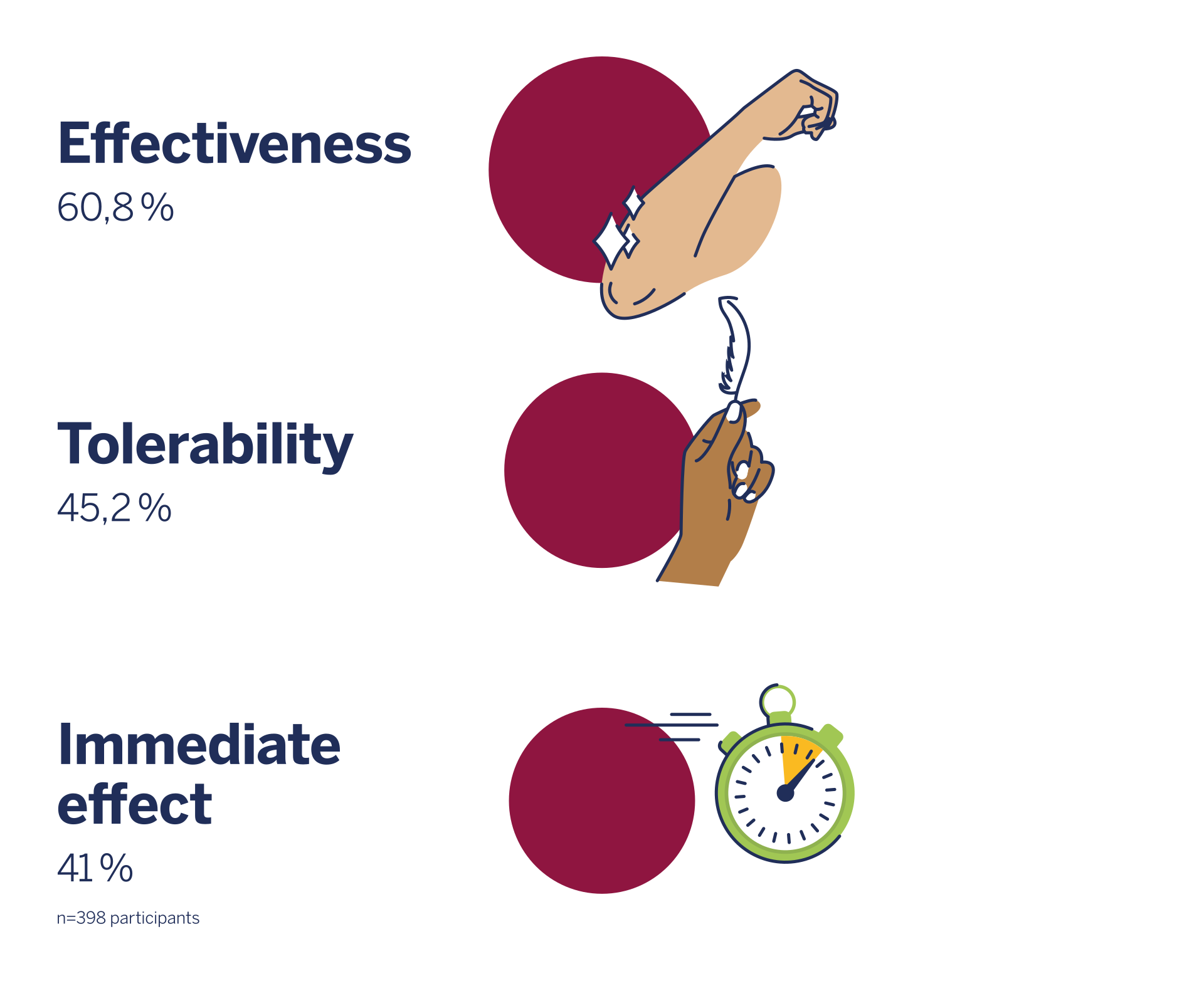
Finding the right skin care remains a challenge for many
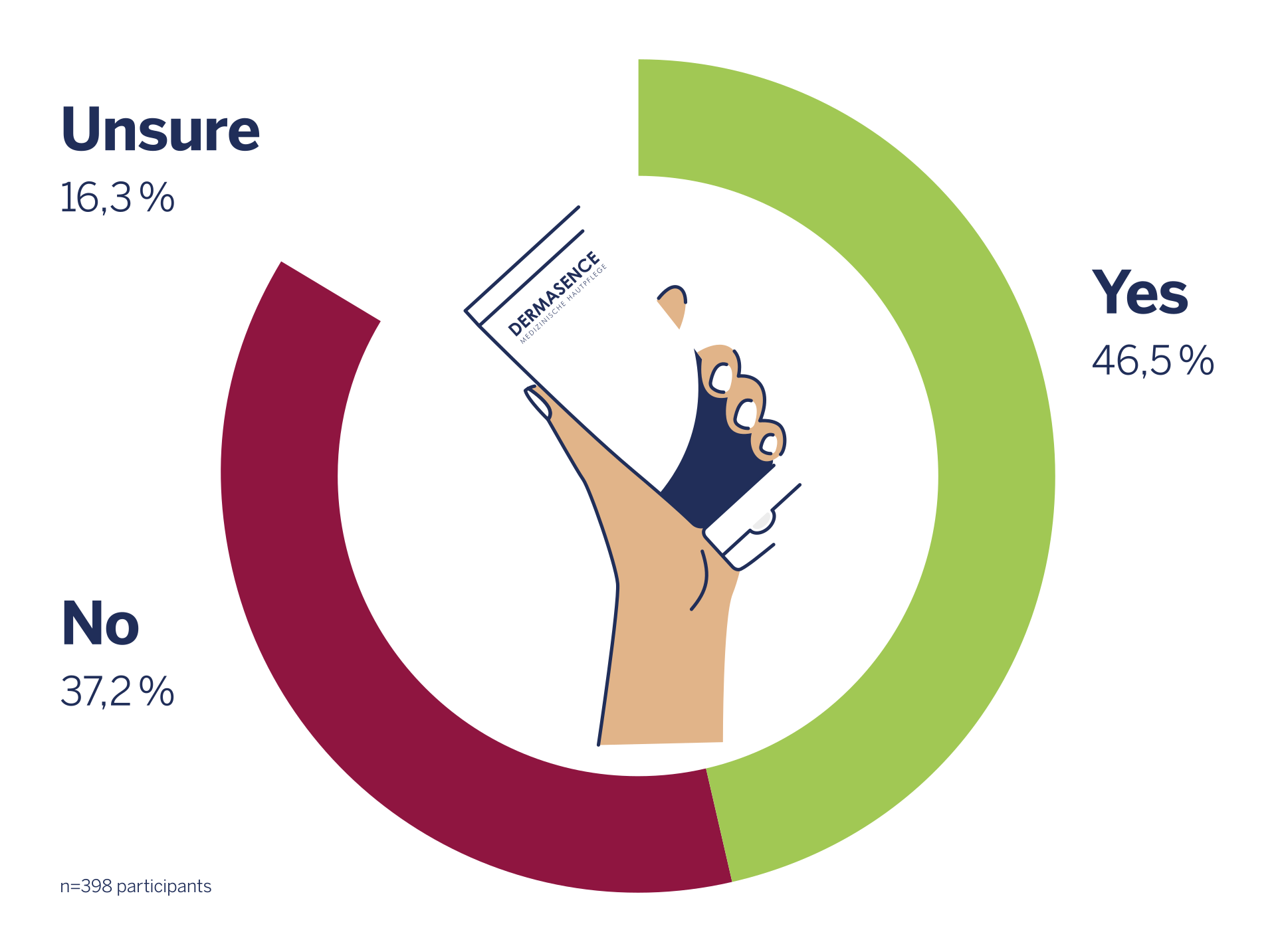
Most respondents agree that skin care plays an important role in managing psoriasis. Nevertheless, not everyone has found a skin care product that fully meets their individual needs. When asked whether they had already found the right skin care solution, more than half of respondents answered "No" or "Unsure". For many people with psoriasis, the search for suitable products therefore remains part of everyday life.
Download
All key survey findings in one PDF
Every skin has its own story – and we are listening
At DERMASENCE, we would like to thank all participants for sharing their personal experiences and honest insights. The findings of our psoriasis study clearly show that every diagnosis is associated with unique experiences, challenges and individual needs. They also underline the importance of awareness, understanding and a holistic view of the condition.
As specialists in medical skin care, we are committed to supporting people with psoriasis in their everyday lives. Our study confirms the important role that skin care plays for many people affected by the condition and highlights the need for individually tailored solutions. With our DERMASENCE Vitop Psoricur products, we have therefore developed a skin care series specifically designed for the needs of flaky, dry and psoriasis-prone skin. These products can be a valuable addition to daily skin care and may help prolong periods without flare-ups of psoriasis symptoms.
Together with the expert advice available in pharmacies, we aim to help people feel more comfortable in their own skin.